Steak Doneness Guide: From Blue Rare to Well Done
The difference between a disappointing steak and an outstanding one often comes down to doneness. Cook it 10 degrees too far and texture, juiciness, and flavor all suffer. But doneness is not about memorizing rules—it is about understanding what happens inside the meat as temperature rises, and matching that to your preferences and the cut you chose.
This guide covers every standard doneness level, exact temperature targets, visual cues, texture tests, and how different cuts respond at each stage. Whether you prefer your steak cool and red or fully cooked through, you will know exactly what to aim for and how to get there.
What Is Steak Doneness?
Doneness refers to the internal temperature and corresponding color, texture, and moisture of cooked steak. As heat penetrates the meat, proteins denature, fats melt, moisture redistributes, and color shifts from red to pink to brown.
Different people prefer different levels because preferences for chew, juice, and flavor intensity vary. There is no “correct” doneness—only the one that matches your taste and the characteristics of your cut.
The Science: What Happens at Each Temperature
- Below 120°F (49°C): Muscle proteins remain mostly unchanged, fats solid, texture very soft.
- 120–130°F (49–54°C): Myoglobin (red pigment) starts changing, marbling begins to soften.
- 130–140°F (54–60°C): Collagen structure loosens slightly, more juice release, pink center.
- 140–150°F (60–66°C): Significant moisture loss, firmer bite, faint pink remains.
- 150°F+ (66°C+): Most moisture expelled, proteins fully coagulated, gray-brown throughout.
The 6 Standard Doneness Levels
1. Blue Rare (Very Rare)
Pull temp: 115–120°F (46–49°C)
Final after rest: 120–125°F (49–52°C)
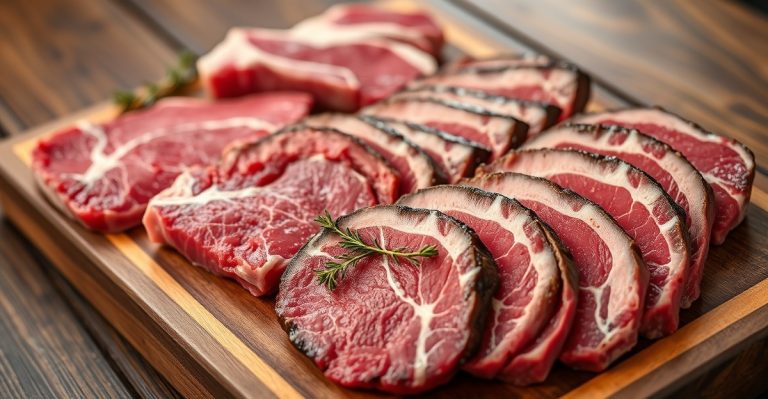
Appearance: Seared outside, cool deep red inside, almost raw
Texture: Extremely soft, very juicy
Best for: Ultra-premium cuts with excellent marbling (wagyu, high-grade ribeye)
Notes: Not for everyone. Surface must be seared properly for food safety.
2. Rare
Pull temp: 120–125°F (49–52°C)
Final after rest: 125–130°F (52–54°C)
Appearance: Bright red center, thin cooked band at edges
Texture: Soft, very juicy, slight resistance
Best for: Tender cuts like filet mignon, ribeye, strip
Notes: Marbling has not fully melted yet; better for leaner cuts or very high-quality beef.
3. Medium-Rare
Pull temp: 125–130°F (52–54°C)
Final after rest: 130–135°F (54–57°C)
Appearance: Warm red center, wider pink zone
Texture: Tender, juicy, some spring when pressed
Best for: Almost all premium steaks—ribeye, strip, filet, porterhouse
Notes: This is the sweet spot for most steak lovers. Marbling melts nicely, texture stays tender, flavor is full.
4. Medium
Pull temp: 135–140°F (57–60°C)
Final after rest: 140–145°F (60–63°C)
Appearance: Warm pink center, outer zones fully cooked
Texture: Firmer bite, less juice, still moist if well-marbled
Best for: Fattier cuts like ribeye; people who want cooked-through pink without dryness
Notes: A safe choice for mixed groups. Balances doneness with moisture retention.
5. Medium-Well
Pull temp: 145–150°F (63–66°C)
Final after rest: 150–155°F (66–68°C)
Appearance: Faint pink center, mostly gray-brown
Texture: Firm, noticeably drier, some chew
Best for: Ground beef patties, less-tender cuts, or personal preference
Notes: Premium steaks lose much of their moisture and tenderness here. Choose fattier cuts if cooking to this level.
6. Well Done
Pull temp: 155°F+ (68°C+)
Final after rest: 160°F+ (71°C+)
Appearance: Gray-brown throughout, no pink
Texture: Very firm, dry unless heavily marbled
Best for: Specific dietary needs, strong personal preference
Notes: Most chefs discourage well-done for expensive cuts, but if you prefer it, cook lower and slower to preserve as much moisture as possible.
How to Check Steak Doneness (3 Methods)
Method 1: Instant-Read Thermometer (Most Accurate)
Insert probe from the side into the thickest part. Avoid bone or fat pockets. This is the only truly reliable method.
Method 2: Touch Test
Compare steak firmness to the base of your thumb when making different hand gestures. This is a rough guide, not precise:
- Relaxed hand = rare
- Thumb to index = medium-rare
- Thumb to middle = medium
- Thumb to ring = medium-well
- Thumb to pinky = well done
Method 3: Visual Cut Test
Slice a small section to check color. Works but releases juices. Only use if you do not have a thermometer.
Doneness Recommendations by Cut
| Cut | Best Doneness | Why |
|---|---|---|
| Ribeye | Medium-rare to medium | Melts marbling, keeps tenderness |
| Filet Mignon | Rare to medium-rare | Lean; overcooking dries it out |
| New York Strip | Medium-rare to medium | Firm texture, benefits from slight fat rendering |
| T-Bone/Porterhouse | Medium-rare | Balances strip and tenderloin sides |
| Sirloin | Medium-rare | Lean; higher temps make it chewy |
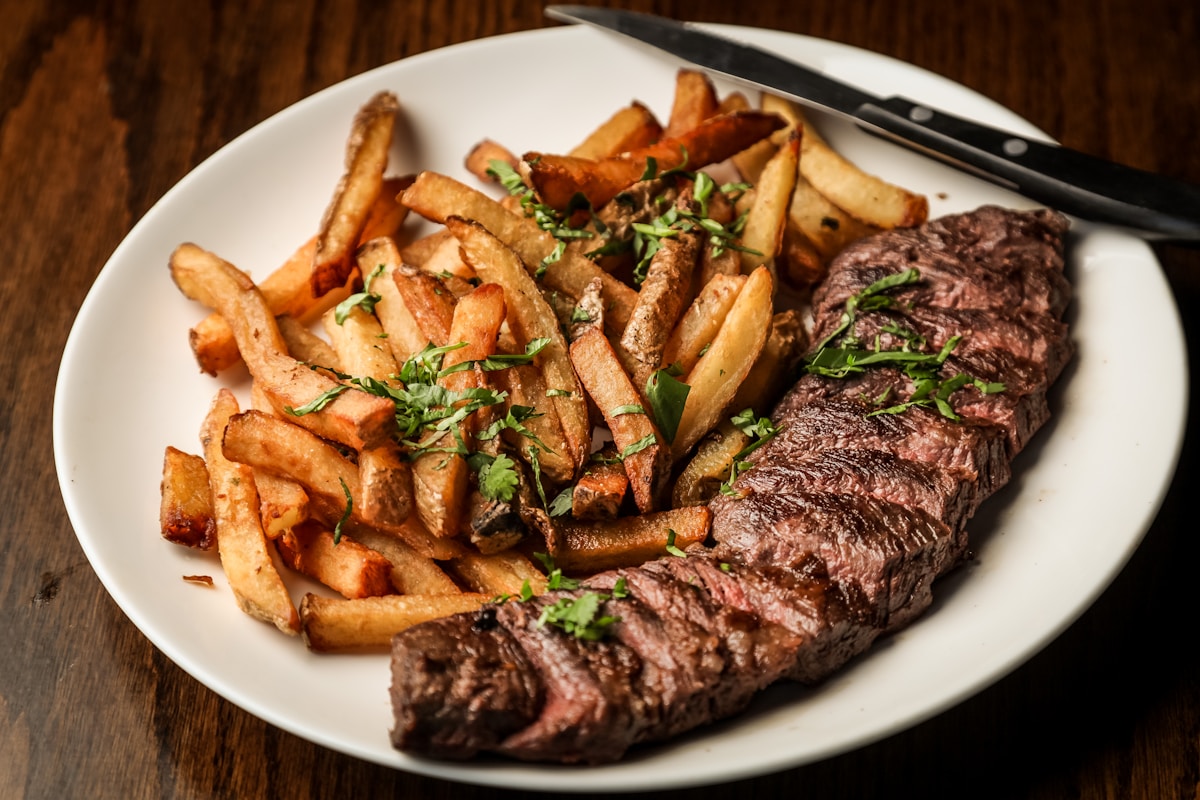
| Flank/Skirt | Medium-rare max | Thin, cooks fast; well-done = shoe leather |
Carryover Cooking: Why Resting Matters
After you remove steak from heat, internal temperature continues rising 5–10°F during rest. This is called carryover cooking. If you cook to your exact target without accounting for carryover, your steak will overshoot.
Solution: Pull steak 5°F below your goal, rest 5–8 minutes, and it will land perfectly.
Adjusting for Thickness
Thick steaks (2+ inches) need gentler heat or reverse sear to avoid overcooking edges while hitting center temp. Thin steaks (under 1 inch) cook so fast that medium-rare is hard to achieve—they often jump straight to medium or beyond.
Best thickness for control: 1.25–1.75 inches.
Common Doneness Mistakes
Mistake 1: Cooking by Time Alone
Fix: Time varies with thickness, pan heat, and starting temp. Always use a thermometer.
Mistake 2: Cutting Too Soon
Fix: Rest at least 5 minutes so juices stay inside the meat.
Mistake 3: Not Accounting for Carryover
Fix: Pull early and let residual heat finish the job.
Mistake 4: Overcooking Lean Cuts
Fix: Filet and sirloin taste best rare to medium-rare. Past that, they lose moisture fast.
How Marinades and Aging Affect Appearance
Marinated steaks or dry-aged beef may look darker or redder than typical. This can throw off visual doneness checks. Stick to thermometer readings for consistency.
Final Word: Know Your Number, Hit It Every Time
Memorize your preferred pull temperature and you will never second-guess yourself again. Great steak is not mysterious—it is just controlled heat applied to a known target.
Start with medium-rare (pull at 130°F). Adjust from there based on what you like. Once you dial it in, you will cook better steaks than most restaurants.
How Cooking Method Changes Doneness Results
Doneness targets stay the same, but cooking method changes how quickly you reach them and how evenly heat spreads through the meat.
Skillet Searing
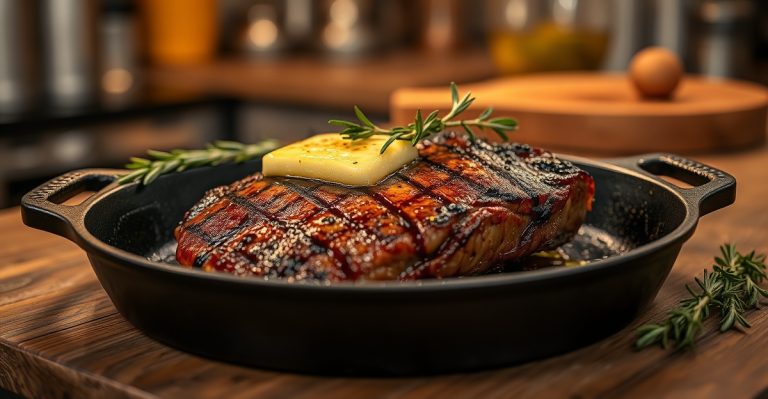
Fast crust, strong flavor, and rapid temperature climb. Great for 1–1.5 inch steaks. Requires careful timing and active management.
Grill (Two-Zone)
Adds smoke and char flavor. Use direct heat to sear, indirect heat to finish. Excellent for thicker steaks because temperature can be controlled gradually.
Reverse Sear
Best for 1.75-inch+ steaks. Slow oven or indirect heat first, then hard sear at the end. Produces very even doneness and minimal gray band.
Sous Vide + Sear
Most precise method for hitting exact doneness. You set water bath temp, then sear for crust. Texture is consistent but some cooks miss the gradual gradient from edge to center.
Why Rest Time Matters as Much as Temperature
Steaks continue to cook off-heat and the juices redistribute during resting. Skip this step and your plate fills with liquid while the steak dries out in your mouth. Resting is not optional if you care about texture.
- Thin steaks: rest 3–5 minutes
- Standard steaks (1.25–1.5 in): rest 5–8 minutes
- Large bone-in steaks: rest 8–12 minutes
For cleaner presentation, tent loosely with foil—do not wrap tightly, or you’ll steam the crust.
Doneness for Groups: How to Please Everyone
When cooking for guests with different preferences, use this strategy:
- Cook one large steak (ribeye, strip, or porterhouse) to medium-rare.
- Slice and serve the center pieces to rare/medium-rare eaters.
- Return edge slices briefly to pan for medium or medium-well guests.
This avoids overcooking an entire expensive steak just to satisfy one preference.
Altitude, Pan Type, and Other Variables
Small technical factors can shift your outcome:
- Cast iron stores heat and browns aggressively.
- Stainless steel gives excellent crust but needs better oil control.
- Nonstick is safer for eggs, not ideal for steak crust.
- High altitude can subtly affect moisture loss and cook timing.
- Starting temp (fridge-cold vs tempered) changes timing significantly.
That is why your “7-minute steak” may take 5 minutes one day and 9 minutes another. Use temperature, not memory.