Garlic Butter Steak Recipe: Pan-Seared Perfection in 15 Minutes
Garlic butter steak is a pan-seared steak basted with melted butter, fresh garlic, and herbs during the final minute of cooking. The butter amplifies the steak’s richness, the garlic adds aromatic depth, and the herbs (typically thyme or rosemary) provide a subtle earthy note that balances the fat. This technique is sometimes called arroser in French kitchens — the act of spooning hot fat over meat to build flavor and create a golden, aromatic crust.
Ingredients
- 2 ribeye, New York strip, or sirloin steaks (1 to 1.5 inches thick, 10–14 oz each)
- Kosher salt and freshly cracked black pepper
- 2 tablespoons neutral oil (vegetable, canola, or avocado oil — high smoke point required)
- 4 tablespoons unsalted butter
- 4 garlic cloves, smashed (not minced — you want large pieces that release flavor slowly)
- 3–4 sprigs fresh thyme or 2 sprigs fresh rosemary
Step-by-Step Instructions
- Bring steaks to room temperature. Remove from refrigerator 30–45 minutes before cooking. Pat completely dry with paper towels — surface moisture prevents browning.
- Season aggressively. Coat both sides with kosher salt and cracked black pepper. Press the seasoning into the meat. Don’t add garlic powder — fresh garlic comes later.
- Preheat cast iron skillet. Place skillet over high heat for 3–4 minutes until it just begins to smoke. Cast iron retains heat better than stainless, which is critical for maintaining temperature when cold steak hits the pan.
- Add oil, then steak. Pour neutral oil into the hot skillet and swirl to coat. Immediately lay steaks in the pan — you should hear an aggressive sizzle. If not, the pan isn’t hot enough.
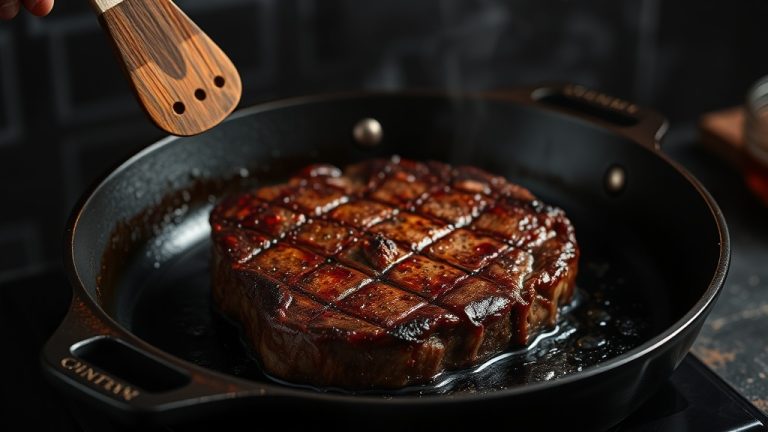
- Sear first side without moving. Cook for 3–4 minutes depending on thickness. Resist the urge to lift, peek, or shift the steak. You’re building a Maillard reaction crust — movement interrupts it.
- Flip once. Use tongs (not a fork — puncturing releases juice). Sear second side for 2–3 minutes.
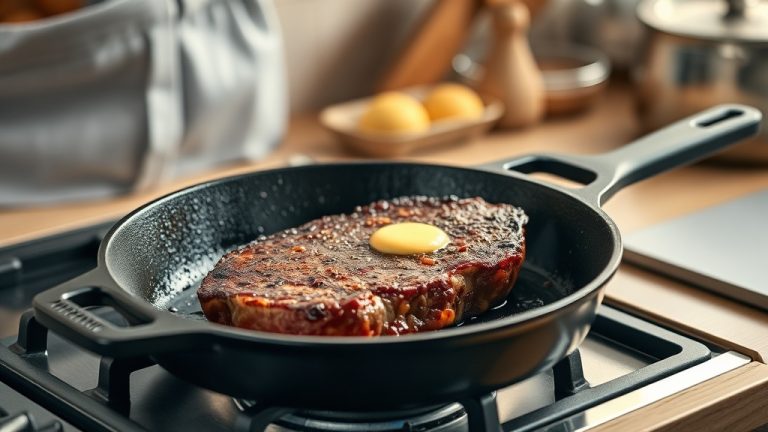
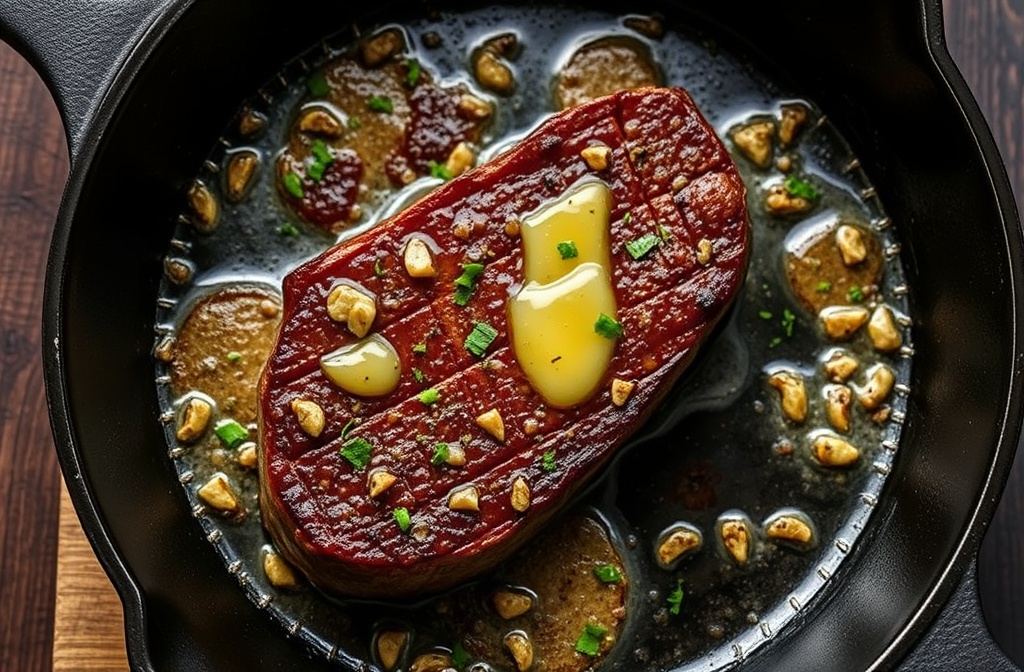
- Add butter, garlic, and herbs. Tilt the pan slightly away from you. Add butter, smashed garlic cloves, and herb sprigs to the lower side of the pan where the butter will pool. As the butter melts and foams, it will absorb the garlic and herb aromatics.
- Baste continuously. Using a large spoon, scoop the melted garlic butter and pour it over the top of the steak repeatedly for 60–90 seconds. This bastes the surface, adds flavor, and helps the steak finish cooking evenly. Tilt the pan as needed to gather the butter.
- Check internal temperature. Insert an instant-read thermometer into the thickest part. Target 130°F (54°C) for medium-rare. If it’s not there yet, continue basting and flipping every 30 seconds until it reaches temperature.
- Rest for 5 minutes. Transfer steaks to a plate. Spoon some of the garlic butter from the pan over the top. Tent loosely with foil. Resting allows juices to redistribute.
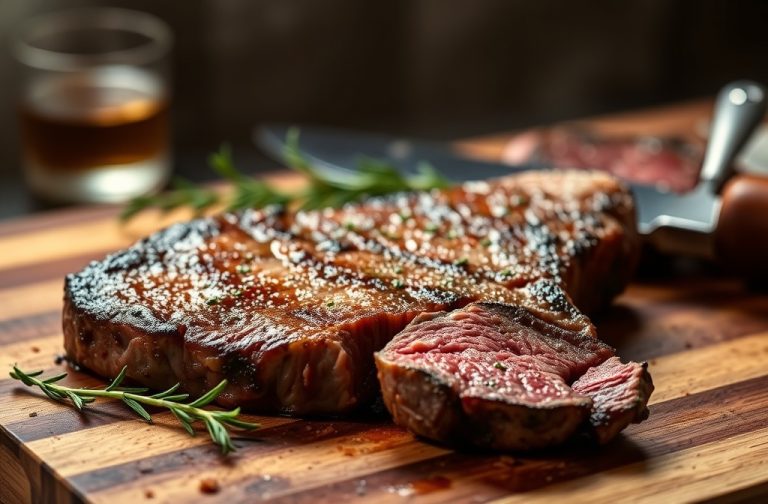
- Slice and serve. Cut against the grain into ½-inch slices. Pour any remaining garlic butter from the pan over the sliced steak. Serve immediately.
Why Use Smashed Garlic Instead of Minced?
Minced garlic burns in 15–20 seconds in hot butter. Smashed whole cloves release flavor more gradually because they have less surface area exposed to the heat. The result is a mellow, sweet garlic flavor rather than the acrid bitterness of scorched garlic. You can remove the cloves before serving or leave them on the plate as aromatic garnish.
Best Cuts for Garlic Butter Steak
| Cut | Why It Works |
|---|---|
| Ribeye | High fat content pairs perfectly with butter — fat amplifies fat |
| New York Strip | Firm texture holds up to high heat; leaner than ribeye but still flavorful |
| Filet Mignon | Extremely tender; butter compensates for its lower natural fat |
| Sirloin | Budget-friendly and benefits significantly from butter basting |
Avoid very thin cuts (under ¾ inch) — they overcook before the butter has time to develop flavor. Avoid extremely thick cuts (over 2 inches) unless you’re using the reverse sear method, because the basting time required to reach target internal temp will burn the garlic.
Garlic Butter Variations
Once you master the base technique, you can modify the butter compound:
- Herb butter: Add fresh parsley, chives, or tarragon along with thyme
- Lemon garlic butter: Squeeze half a lemon into the pan after basting — the acid brightens the richness
- Shallot butter: Replace 2 garlic cloves with 1 finely sliced shallot
- Blue cheese butter: Crumble 2 tablespoons blue cheese into the butter after removing from heat — it melts into a creamy sauce
- Anchovy butter: Add 2 minced anchovy fillets to the butter for umami depth (classic French technique)
Common Mistakes to Avoid
Adding butter too early. If you add butter at the start of the sear, the milk solids will burn before the steak is done. Butter goes in only during the final 60–90 seconds.
Using salted butter. You’ve already salted the steak. Salted butter can push the dish into over-salted territory. Always use unsalted butter and control seasoning separately.
Not drying the steak. Wet steak steams instead of searing. Pat it completely dry before it goes in the pan.
Crowding the pan. If cooking multiple steaks, leave at least 1 inch of space between them. Crowding drops the pan temperature and prevents proper browning. Cook in batches if necessary.
Frequently Asked Questions
Can you make garlic butter steak without a cast iron skillet?
Yes. Stainless steel or carbon steel pans work, though they don’t retain heat quite as well as cast iron. Avoid nonstick pans — they can’t handle the high heat required for a proper sear, and the coating may degrade above 500°F.
Can you use garlic powder instead of fresh garlic?
You can season the steak with garlic powder before searing, but it won’t replicate the aromatic, mellow flavor of fresh garlic basted in butter. Garlic powder also burns easily at high heat. If you use it, apply it lightly mixed with the salt and pepper, and still add fresh garlic to the butter at the end.
What temperature should the pan be?
450–500°F (232–260°C) when the steak goes in. You can test by flicking a drop of water into the pan — if it sizzles and evaporates instantly, you’re ready. If the water beads and rolls, it’s too hot and you risk burning the exterior before the interior cooks.
Should you baste steak with butter on the grill?
It’s harder to control on a grill because the butter drips through the grates and can cause flare-ups. If you want garlic butter flavor on a grilled steak, finish it with compound butter (softened butter mixed with garlic and herbs) after it comes off the grill and during the rest period.
How do you store leftover garlic butter?
Strain out the garlic and herb solids (they’ll spoil quickly). Pour the clarified butter into a sealed container and refrigerate for up to 5 days. It’s excellent for basting chicken, shrimp, or vegetables, or tossed with pasta.