How to Cook Steak for Beginners: A Simple, Foolproof Guide
Cooking your first steak can feel intimidating — one wrong move and you’ve wasted an expensive cut. But here’s the truth: steak is forgiving if you understand a few key principles. This guide covers everything a beginner needs to cook a restaurant-quality steak at home.
Choosing Your First Steak
Don’t start with the most expensive cut. As a beginner, you want something with good marbling and enough thickness to work with. These three are ideal for learning:
- Ribeye — Rich, fatty, and forgiving. Hard to dry out. Best choice for beginners.
- New York Strip — Leaner than ribeye but still flavorful. Great for learning technique.
- Sirloin — Budget-friendly with solid flavor. Perfect for practicing without risk.
Aim for a steak that’s at least 1 inch thick. Thin steaks cook too fast and are harder to control.
Essential Equipment
- Cast iron skillet — Holds heat evenly and creates a better crust than nonstick
- Instant-read thermometer — The most important tool for a beginner
- Tongs — Never use a fork (piercing the steak releases juices)
- Timer — Consistency matters
How to Prep Your Steak
Bring It to Room Temperature
Take your steak out of the refrigerator 30–45 minutes before cooking. A cold center means uneven cooking — the outside will overcook before the inside comes up to temperature.
Pat It Dry
Use paper towels to thoroughly dry the surface. Moisture is the enemy of a good crust. Wet steak = steamed steak.
Season Generously
Salt and pepper is all you need for a beginner’s steak. Use kosher salt (not table salt) and coarse black pepper. Season both sides and the edges. Don’t be timid — steaks need more salt than you think.
The Cooking Method: Pan-Sear
For beginners cooking at home, pan-searing in a cast iron skillet is the most reliable method. Here’s how:
Step 1: Heat Your Pan
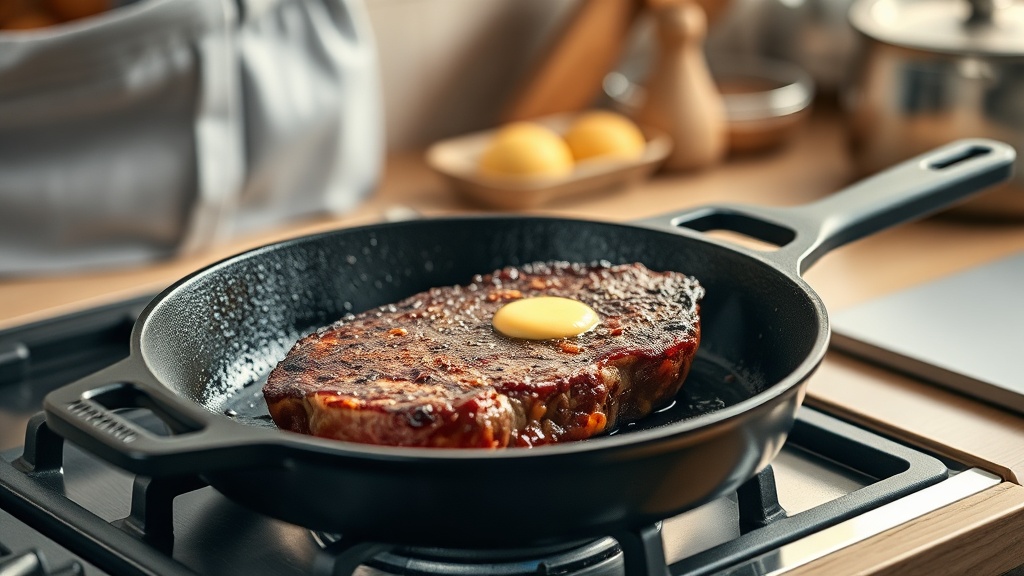
Place your cast iron skillet over high heat for 3–4 minutes. The pan should be extremely hot before the steak touches it. Add a thin layer of oil with a high smoke point — avocado oil or vegetable oil work best. Avoid olive oil at this stage (it burns too easily).
Step 2: Sear the First Side
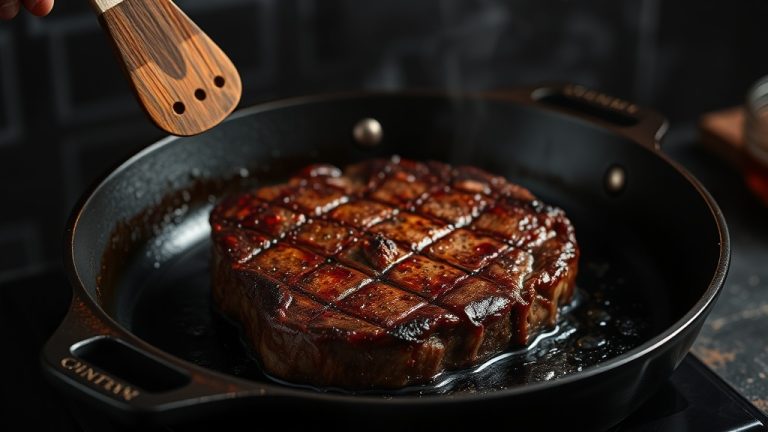
Lay the steak away from you into the pan. You should hear a loud, aggressive sizzle. Don’t touch or move the steak for 2–3 minutes. Resist the urge. Moving it prevents a proper crust from forming.
Step 3: Flip Once
Flip the steak once. The first side should have a deep brown crust. If it’s gray or pale, your pan wasn’t hot enough.
Step 4: Baste with Butter
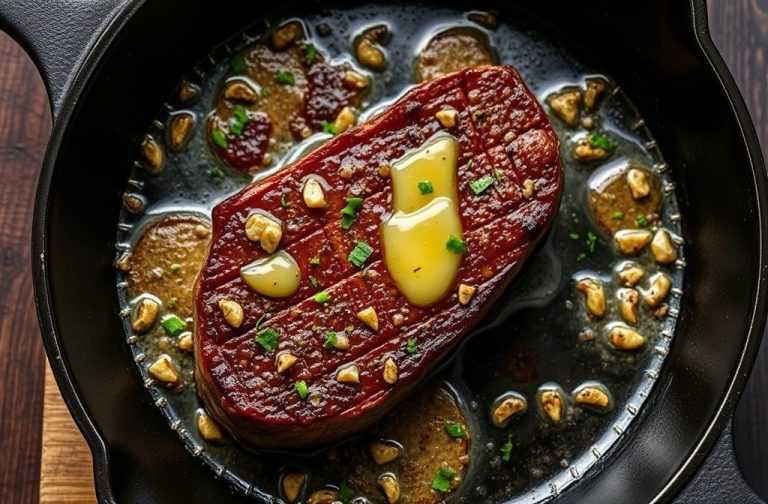
This is what makes steaks taste like a steakhouse. Add 2 tablespoons of butter, 2 garlic cloves (smashed), and a sprig of thyme or rosemary to the pan. Tilt the pan slightly and use a spoon to continuously pour the melted butter over the steak. Do this for the last 1–2 minutes of cooking.
Step 5: Check the Temperature
Insert your thermometer into the thickest part of the steak, horizontally. Pull the steak off heat when it’s 5°F below your target temperature — it will continue cooking while resting.
Doneness Temperatures for Beginners
- Medium-rare (recommended): 130–135°F — warm, red center with maximum juiciness
- Medium: 140–145°F — pink center, less juicy but still good
- Medium-well: 150–155°F — slightly pink, noticeably drier
For your first few steaks, aim for medium-rare. It’s the most forgiving and shows off the steak’s flavor best.
The Rest: Don’t Skip This
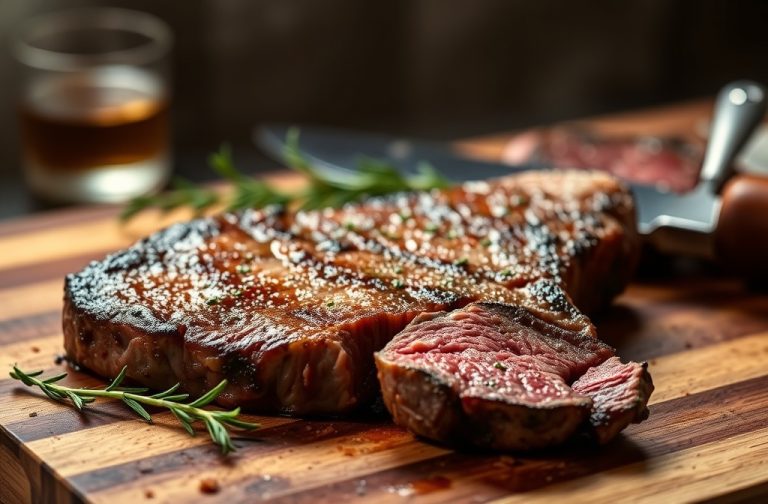
Once the steak comes off the pan, let it rest on a cutting board for 5 minutes before cutting. During cooking, juices are pushed toward the center. Resting lets them redistribute throughout the meat. Cut too soon and you’ll watch those juices pour out onto the board instead of staying in the steak.
Beginner Mistakes to Avoid
Cooking Cold Steak
Cold steak from the fridge = uneven cooking. Always rest at room temperature first.
Not Drying the Surface
Moisture on the surface creates steam instead of sear. Pat dry thoroughly.
Cooking on Low Heat
Low heat gives you gray, steamed steak. High heat gives you crust and color. Don’t be afraid of the smoke.
Cutting Before Resting
Impatience is the enemy of a juicy steak. Five minutes of resting makes a significant difference.
You’re Ready
With a hot pan, a dry seasoned steak, and a thermometer, you have everything you need to cook an excellent steak. The first one might not be perfect — and that’s fine. After two or three attempts, you’ll have the feel for it. Steak cooking is a skill, and like all skills, it gets easier with practice.