Best Steak Marinades: 5 Recipes That Work on Every Cut
Why Marinating Works — and When It Doesn’t
A marinade does two things: it flavors the surface of the meat and, in some cases, begins breaking down surface proteins to improve texture. The acid component (citrus juice, vinegar, wine, buttermilk) denatures proteins at the exterior — but this process is slow and shallow. Even after 24 hours, a marinade penetrates less than half an inch into a steak.
That means marinades are most effective on thin, loose-grained cuts — flank, skirt, bavette — where the surface area is high relative to volume. On a thick ribeye or NY strip, a marinade seasons the outside without significantly affecting the interior. For those cuts, a dry brine (salt only, 1–24 hours ahead) is more effective.
The 5 Components of an Effective Steak Marinade
Every high-performance marinade balances five elements:
- Acid: Citrus juice, wine, vinegar, or buttermilk — starts surface protein breakdown and brightens flavor. Don’t over-acidify; a marinade with too much acid will turn the exterior of the steak mushy (if left too long) or grayish before cooking.
- Oil: Carries fat-soluble flavor compounds (garlic, herbs, spices) and helps transfer heat evenly on the grill. Use a neutral oil with a high smoke point.
- Salt: Draws moisture out initially, then pulls it back in, carrying dissolved flavors deeper into the meat. Critical — don’t skip it.
- Aromatics: Garlic, shallots, onion — raw aromatics add depth; sautéed or roasted aromatics add sweetness.
- Flavor agents: Soy sauce (umami + salt), Worcestershire (fermented depth), mustard (emulsifier + tang), honey or brown sugar (caramelization on the grill).
The Classic: Soy-Worcestershire Steak Marinade
This is the baseline — deeply savory, versatile, and works on virtually every cut.
Ingredients (enough for 1.5–2 lbs of steak):
- 3 tbsp soy sauce
- 2 tbsp Worcestershire sauce
- 2 tbsp olive oil
- 1 tbsp balsamic vinegar
- 3 garlic cloves, minced
- 1 tsp Dijon mustard
- 1 tsp black pepper, coarsely ground
- ½ tsp kosher salt
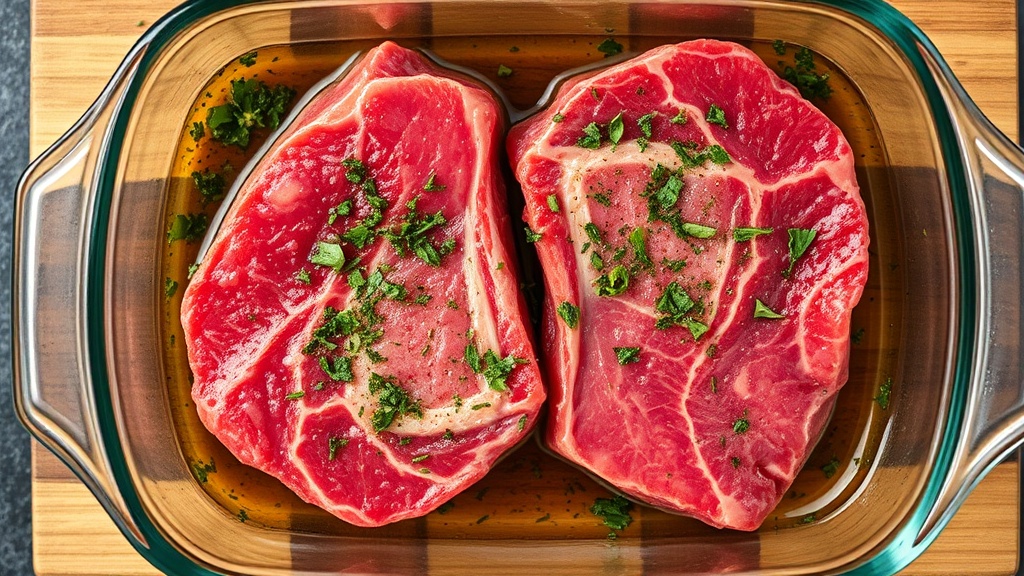
Method: Whisk all ingredients together. Submerge steak in marinade (zip-lock bag works best — eliminates air and ensures even contact). Refrigerate.
Marinating times by cut:
- Flank or skirt steak: 4–12 hours (up to 24 hours for very thick flanks)
- NY Strip or Sirloin: 30 min–2 hours
- Ribeye: 30 min is enough; beyond 2 hours won’t add much
Citrus-Herb Marinade (Bright, Mediterranean-Style)
Best for: skirt steak, flank, chicken-fried steak cuts. The citrus acid works fast — don’t leave delicate cuts in this longer than 4–6 hours.
Ingredients:
- Juice of 1 lemon + 1 orange (about 4–5 tbsp total)
- 3 tbsp olive oil
- 4 garlic cloves, minced
- 1 tbsp fresh rosemary, finely chopped (or ½ tsp dried)
- 1 tbsp fresh thyme leaves
- 1 tsp kosher salt
- ½ tsp black pepper
Variation: Add 1 tbsp Dijon mustard for a sharper, more complex flavor that also helps emulsify the marinade.
Smoky Chipotle Marinade (Spicy, Bold, Grill-Ready)
Best for: flank steak tacos, skirt steak, beef fajitas. The chipotle adobo sauce creates a beautiful charred crust on the grill.
Ingredients:
- 2 chipotle peppers in adobo sauce + 1 tbsp adobo sauce
- 2 tbsp olive oil
- 2 tbsp lime juice
- 3 garlic cloves
- 1 tsp cumin
- 1 tsp smoked paprika
- 1 tsp brown sugar
- 1 tsp kosher salt
Method: Blend all ingredients into a paste. Coat steak thoroughly. Marinate 2–8 hours. Pat dry before grilling — the sugars in the adobo can cause burning if the surface is too wet.
Asian Ginger-Sesame Marinade
Best for: skirt steak, bavette, Denver steak. Doubles as a dipping sauce if you reserve a portion before the raw steak goes in.
Ingredients:
- 3 tbsp soy sauce
- 1 tbsp sesame oil
- 1 tbsp rice wine vinegar
- 1 tbsp honey
- 1 tbsp fresh ginger, grated
- 2 garlic cloves, minced
- 1 tsp chili flakes (optional)
- 1 tbsp neutral oil
Marinate 2–6 hours. The honey promotes caramelization — watch for flare-ups on the grill.
Red Wine Marinade (Classic French-Inspired)
Best for: NY strip, sirloin, tougher cuts like top round. Wine tannins assist protein breakdown; the flavor profile is classic steak house.
Ingredients:
- ½ cup dry red wine (Cabernet Sauvignon or Merlot)
- 2 tbsp olive oil
- 1 tbsp red wine vinegar
- 2 shallots, finely diced
- 3 garlic cloves, minced
- 1 sprig fresh thyme
- 1 bay leaf
- 1 tsp kosher salt
- ½ tsp black pepper
Marinate 4–24 hours in the refrigerator.
Common Marinating Mistakes
- Marinating at room temperature: Any marinade containing raw meat juices becomes a food safety risk above 40°F. Always marinate in the refrigerator.
- Over-marinating with high-acid recipes: Beyond 24 hours in a citrus or vinegar-heavy marinade, the exterior proteins break down too aggressively, creating a mushy, mealy texture.
- Not patting the steak dry before grilling: Wet surfaces steam instead of sear. Pat with paper towels; the marinade flavor is already embedded in the surface.
- Reusing raw marinade as a sauce: If you want a finishing sauce, set aside a clean portion before adding raw meat. Raw marinade carries bacteria and cannot be safely used without boiling for at least 5 minutes.
- Skipping the marinade for fatty cuts: Ribeye, T-bone, and porterhouse have enough internal fat and flavor that a marinade adds little. A dry brine (salt 1–24 hours ahead) does more for these cuts.
Frequently Asked Questions
Can you marinate a steak for too long?
Yes. With high-acid marinades (citrus, vinegar), more than 12–24 hours on thin cuts degrades the texture, making the surface mushy. Soy-based or wine-based marinades are gentler; 24–48 hours is safe for tougher cuts. In general, 4–12 hours covers most situations.
Do you need to pierce the steak before marinating?
Not necessary and not recommended for quality cuts — piercing introduces surface bacteria deeper into the meat. The marinade will penetrate shallow cuts naturally. For very thick cuts, scoring the surface lightly (1/4 inch deep) along the grain increases surface contact without the food safety risk of deep piercing.
Can I use a marinade as a steak sauce?
Only if you reserved a clean portion before adding raw meat, or if you boil the used marinade for at least 5 minutes to eliminate pathogens. The flavor intensifies significantly when reduced — start with a small amount.
Does marinating work on frozen steak?
It works, but only once the steak has thawed. Marinade cannot penetrate frozen meat. Thaw in the refrigerator, then transfer to marinade — or marinate while thawing (place steak in marinade bag while still frozen; it marinates as it thaws, typically 12–18 hours).
What is the best marinade for tough steak cuts?
Buttermilk or a citrus-based marinade with 6–12 hours of contact time works best on tougher cuts like flank, skirt, or top round. The lactic acid in buttermilk is gentler than citric acid, making it ideal for longer marinating without texture degradation.