Best Steak Cuts for Grilling: A Complete Guide from Ribeye to Skirt
Why the Right Cut Makes or Breaks Your Grill Session
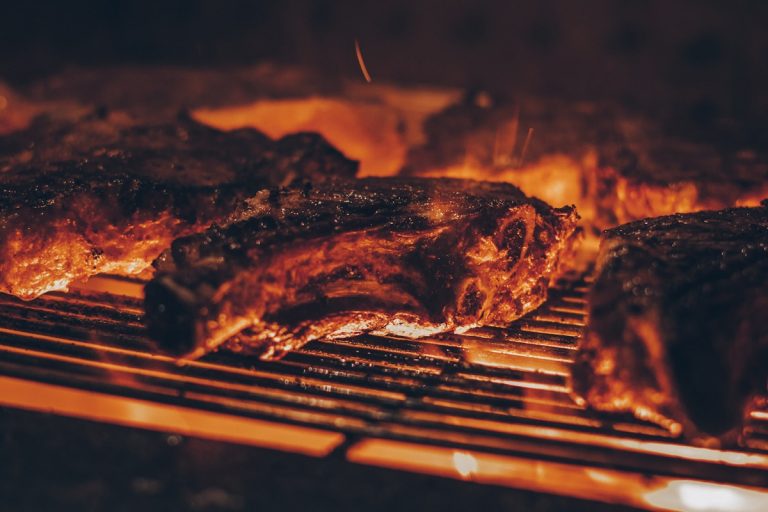
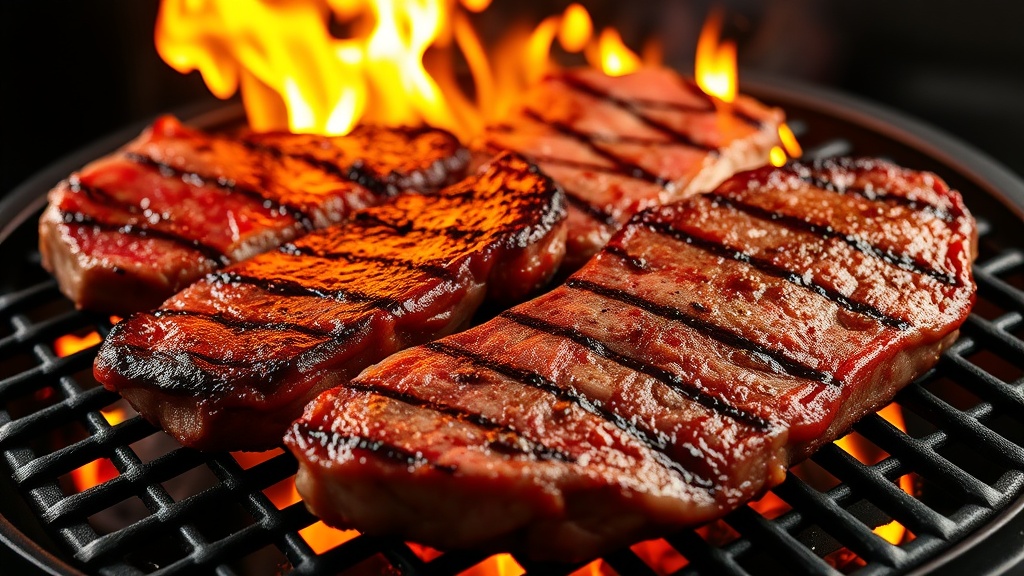
Not every steak belongs on a grill. Some cuts wilt under direct heat, turning chewy and gray. Others transform—crust forming, fat rendering, flavor deepening in ways that no oven or skillet can replicate. Choosing the right cut before you fire up the coals is the single most important decision you’ll make.
Here’s a ranked guide to the best steak cuts for grilling, with the honest tradeoffs for each.
1. Ribeye: The Gold Standard for Grilling
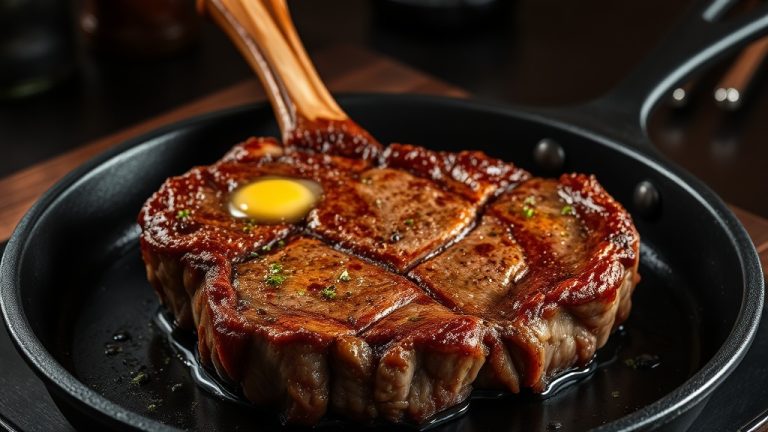
The ribeye (also called Delmonico or Scotch fillet) comes from the longissimus dorsi and spinalis muscles, running along the upper rib section of the animal (ribs 6–12). Heavy intramuscular fat—marbling—bastes the meat from the inside as it cooks, making it extraordinarily forgiving over high heat.
- Best thickness: 1–1.5 inches
- Ideal doneness: Medium-rare (130–135°F / 54–57°C)
- Grill method: Two-zone setup—sear over direct high heat 2–3 min per side, rest on indirect heat to finish
- Bone-in vs. boneless: Bone-in (cowboy ribeye) conducts heat more evenly and adds flavor; boneless cooks faster and slices cleaner
Bottom line: The ribeye’s high fat content means it handles high heat better than any other cut. If you want one cut to define your grilling, this is it.
2. T-Bone and Porterhouse: Two Cuts, One Steak
The T-shaped bone divides two muscles: the NY strip (longissimus dorsi) on the large side, and the tenderloin (psoas major) on the small side. In a porterhouse, the tenderloin section is at least 1.25 inches wide (USDA standard); in a T-bone, it’s narrower.
The challenge: these two muscles cook at different rates. The strip benefits from high direct heat; the tenderloin overcooks easily. Solution: position the tenderloin side toward indirect heat or the cooler edge of the grill.
- Best thickness: 1.25–1.5 inches minimum (thinner cuts dry out before the crust develops)
- Ideal doneness: Medium-rare to medium (130–140°F)
- Grill method: Sear presentation side first over direct heat, then rotate 45° for crosshatch marks, flip, finish on indirect
3. New York Strip: Clean, Consistent, Crowd-Pleasing
The strip steak (also Kansas City strip or sirloin strip) comes from the short loin, the muscle just behind the ribs. It has moderate marbling, a firm texture, and a distinct beefy flavor without the richness of a ribeye. The fat cap on one edge renders beautifully on a grill—press it against the grates for 30 seconds to render it down before laying the steak flat.
- Best thickness: 1–1.25 inches
- Ideal doneness: Medium-rare (130–135°F)
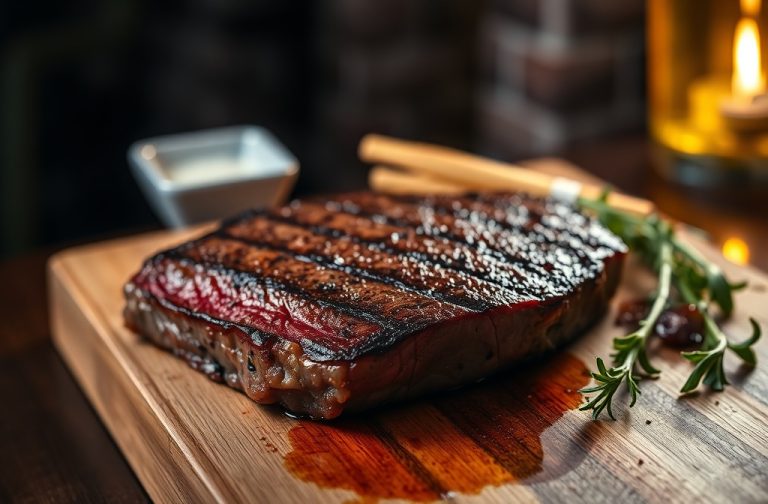
- Grill method: High direct heat throughout; the lower fat content means shorter cook time than ribeye
4. Flank Steak: The Marinating Champion
Cut from the abdominal muscles, flank steak is lean, coarse-grained, and deeply flavored. Without marinating, it can be tough. With a 4–24 hour marinade containing acid (citrus, vinegar, or buttermilk), the fibers relax and the steak becomes one of the most flavorful options on the grill.
- Best thickness: 0.75–1 inch (typically sold whole, 1–2 lbs)
- Ideal doneness: Medium-rare only—going past 140°F makes it noticeably tough
- Grill method: High direct heat, 4–5 minutes per side; cook fast and hot
- Critical step: Slice against the grain at a 45° angle—this shortens the muscle fibers and dramatically improves tenderness
5. Skirt Steak: High Heat, Maximum Char
Skirt steak (diaphragm muscle) is even thinner and fattier than flank. It has an intense, iron-forward flavor and a loose, porous grain that absorbs marinades exceptionally well. It’s the traditional cut for fajitas and is widely used in South American churrasco.
- Best thickness: 0.5–0.75 inch
- Ideal doneness: Medium-rare; it cooks in 2–3 minutes per side on a screaming-hot grill
- Grill method: Maximum direct heat, very short cook time; rest for 5 minutes before slicing
- Outside vs. inside skirt: Outside skirt (from the plate section) is more tender and more expensive; inside skirt is more commonly available
6. Picanha: The Brazilian Grill Cut Gaining Ground in the U.S.
Picanha (rump cap, coulotte) sits above the rump, covered in a thick fat cap. It’s deeply embedded in Brazilian churrascaria culture and is gaining a dedicated following among American grillers. The fat cap is kept intact during grilling, rendering slowly and basting the lean meat underneath.
- Best method: Cut into 1-inch slices across the grain, fold into a C-shape (fat cap out), and skewer; or grill whole with fat cap up on indirect heat, then sear over direct heat at the end
- Ideal doneness: Medium-rare (130–135°F)
- Seasoning: In the Brazilian tradition, coarse kosher salt only—the fat cap does the rest
Cuts to Avoid on the Grill
Some cuts genuinely don’t belong over live fire:
- Tenderloin/filet mignon: Too lean, too delicate. It’s better in a cast iron with butter basting. On a grill, it loses its subtle flavor to char.
- Chuck eye (unless specifically cut for grilling): Good pan-braised; too much connective tissue for quick grilling.
- Round steaks: Bottom round, eye of round—tough by nature, require slow moist heat. Grill heat makes them worse, not better.
Quick Comparison Table
| Cut | Marbling | Ideal Doneness | Best For |
|---|---|---|---|
| Ribeye | High | Medium-rare | Flavor, forgiving for beginners |
| T-Bone / Porterhouse | Medium-high | Medium-rare | Showpiece grilling |
| NY Strip | Medium | Medium-rare | Clean, consistent results |
| Flank | Low | Medium-rare only | Marinating, sliced presentations |
| Skirt | Medium | Medium-rare | Fast cook, maximum char, fajitas |
| Picanha | Medium (fat cap) | Medium-rare | Brazilian-style, fat cap lovers |
Frequently Asked Questions
What is the best steak cut for a charcoal grill?
Ribeye handles the intense, uneven heat of charcoal better than any other cut. The high fat content prevents it from drying out during flare-ups, and the smoke enhances the already-rich flavor.
What is the best steak cut for grilling for beginners?
New York strip is the most forgiving for beginners: uniform thickness, moderate fat content, and no complex two-muscle cooking challenge like the T-bone. A 1-inch strip at medium-rare is nearly impossible to ruin.
Should I oil the grill grates or the steak before grilling?
Oil the steak, not the grates. Brush a thin coat of high-smoke-point oil (avocado, refined canola, or grapeseed) directly on the steak. Oiling the grates burns off before the steak hits them and can cause flare-ups.
Do I need to marinate ribeye or NY strip before grilling?
No. Well-marbled cuts like ribeye and strip don’t need tenderizing and their flavor doesn’t benefit from acid marinades. A dry brine (kosher salt, 45 minutes to 24 hours before cooking) is more effective: it draws moisture to the surface, which then gets reabsorbed, seasoning the meat deeper than a wet marinade.
What grill temperature is best for steaks?
Aim for 450–550°F (232–288°C) on the direct-heat zone. Use the hand test: you should be able to hold your palm 3–4 inches above the grates for no more than 2–3 seconds.