T-Bone vs Porterhouse: Key Differences Every Steak Lover Should Know
T-bone vs porterhouse is one of the most common questions at a steakhouse. Both steaks come from the same section of the cow, feature the same dramatic T-shaped bone, and contain two distinct muscles. The difference comes down to one measurement: the size of the tenderloin.
The Core Difference
Both cuts are sliced from the short loin — the section behind the ribs and in front of the sirloin. The T-shaped bone separates two muscles: the strip loin (New York strip side) on the larger half, and the tenderloin (filet mignon side) on the smaller half.
| Feature | T-Bone | Porterhouse |
|---|---|---|
| Tenderloin width (USDA) | 0.25–1.24 inches | 1.25 inches or more |
| Where it’s cut from | Forward short loin | Rear short loin |
| Tenderloin size | Smaller | Larger (sometimes called a filet) |
| Typical weight | 16–24 oz | 24–48 oz |
| Price | Lower | Higher |
| Best for | 1–2 people | 2+ people, showpiece |
USDA rule: The USDA defines a porterhouse as a T-bone where the tenderloin section measures at least 1.25 inches across its widest point. Smaller than that and it’s a T-bone. Restaurants don’t always follow this spec.
Flavor and Texture: Two Muscles in One
Both cuts give you two eating experiences on one plate. This is part of their appeal — and part of their challenge when cooking.
- Strip side: Beefy, slightly chewy, well-marbled. Holds up to higher heat. The flavor workhorse.
- Tenderloin side: Butter-soft, mild, delicate. Overcooks quickly. The texture showpiece.
In a porterhouse, the tenderloin section is large enough to eat as a standalone course. In a T-bone, it’s a smaller bonus alongside the dominant strip.
The Cooking Challenge
The bone and the two different muscles create an uneven cooking problem. The strip side runs hotter (more fat, denser muscle), while the tenderloin side is closest to the bone and cooks slower.
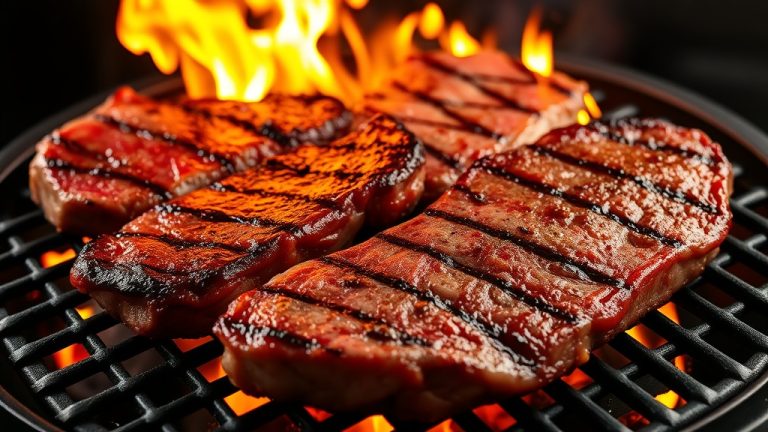
- Use a two-zone fire when grilling — hot side for the strip, cooler edge for the tenderloin
- Position the tenderloin away from direct flame or the hottest part of the pan
- Check temperature at the tenderloin — if the filet reads 130°F, the strip is already at 135–138°F. That’s your target.
- Rest on the bone side down — the bone acts as an insulator and slows overcooking on rest
Don’t use the strip as your temperature guide. It’ll read done while the tenderloin is still underdone — or the tenderloin will overcook while you wait for the strip to catch up.
Best Cooking Methods
Cast Iron + Oven (Best for Thick Cuts)
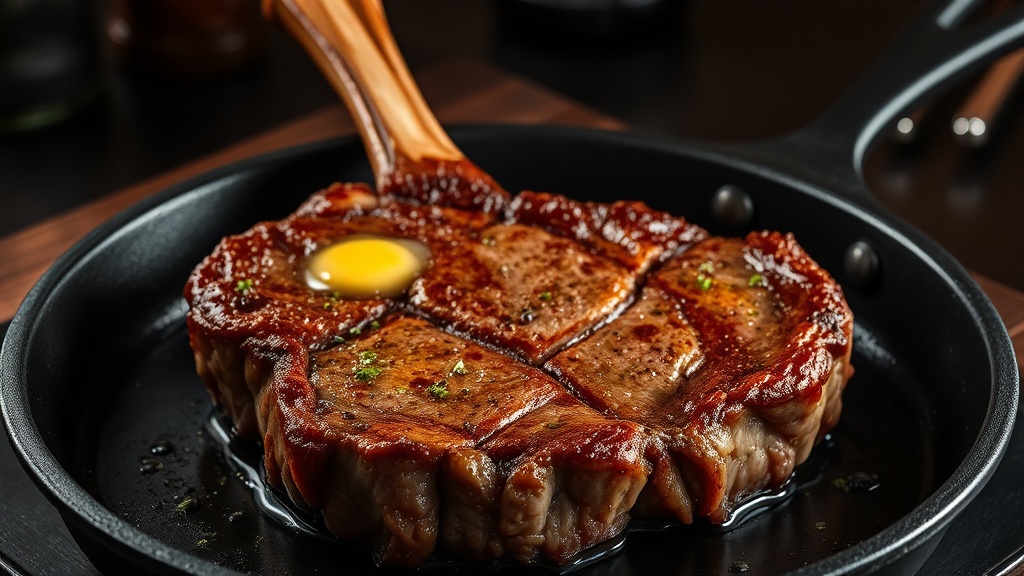
Sear at high heat in cast iron for a strong crust, then transfer to a 400°F oven to finish. This gives even heat distribution across the bone. Pull when the tenderloin reads 125°F. Rest 8 minutes.
Two-Zone Grilling (Best for T-Bone)
Build a two-zone fire. Sear both sides over direct heat, then move to indirect with the tenderloin pointing away from the coals. Finish to temperature and rest.
Reverse Sear (Best for Porterhouse)
For a 2-inch+ porterhouse, reverse sear is ideal. Low oven (250°F) until the center hits 120°F, then a ripping-hot sear for 60–90 seconds per side. Minimal carryover, maximum crust.
T-Bone or Porterhouse: Which Should You Buy?
- Buy a T-bone if you want classic steakhouse flavor at a lower price, you’re cooking for one, or the strip loin is your priority.
- Buy a porterhouse if you’re cooking for two, want an impressive centerpiece, or love filet mignon alongside your strip.
- Skip both if you want the cleanest filet experience or the richest marbling — a standalone ribeye or filet delivers those better on their own terms.
What to Look for at the Counter
- Minimum 1.5 inches thick — thinner than that and you can’t build a proper crust without overcooking the center
- Cherry-red color throughout — gray or brown edges suggest age or improper storage
- White, creamy fat — not yellow (old fat) or thin striations that disappear when trimmed
- Visible marbling in the strip side — the tenderloin won’t marble much by nature, but the strip should
Frequently Asked Questions
Is a porterhouse just a big T-bone?
Essentially, yes. Both come from the short loin and have the same T-shaped bone. The difference is the size of the tenderloin section — a porterhouse has a larger filet side (at least 1.25 inches by USDA standards).
Which is more expensive, T-bone or porterhouse?
Porterhouse is more expensive, typically 20–40% more per pound, because it contains a larger portion of tenderloin — the most expensive cut on the animal.
What temperature should a T-bone reach?
Target 130–135°F (medium rare) measured at the tenderloin side. Pull at 125°F and rest for 5–8 minutes. The strip will be slightly more done, which is fine — it handles higher heat better.
Can you reverse sear a T-bone?
Yes, and it works well for cuts over 1.5 inches thick. Low oven (250°F) to 120°F internal, then a fast high-heat sear. Just monitor the tenderloin temperature closely — it’s the thinner side and rises faster.
Why does the meat near the T-bone taste different?
The bone adds no flavor to the meat (bones don’t leach flavor into surrounding muscle in the time it takes to cook a steak). But meat near the bone stays cooler longer during cooking, so it can end up more tender and slightly different in texture than the outermost parts.