T-Bone Steak: Everything You Need to Know
If you could only pick one steak to cook for the rest of your life, T-bone would be a serious contender. It offers two distinct textures and flavors in one cut—strip steak on one side of the bone, tenderloin on the other. For the price of one steak, you get a built-in variety plate. That is the genius of T-bone.
This guide covers everything from where T-bone comes from and how it compares to porterhouse, to selection tips, ideal doneness, and cooking methods that do justice to both sides of the bone.
What Is a T-Bone Steak?
T-bone is a cross-section of the short loin that contains the T-shaped bone (the transverse process of the vertebra) separating two muscles:
- Strip loin (top loin, NY strip) — on one side of the bone. Firm, beefy, with good marbling.
- Tenderloin (filet) — on the other side of the bone. Extremely tender, lean, mild.
The bone itself adds a little connective tissue and cartilage that softens during cooking, contributing to rich flavor.
T-Bone vs Porterhouse: What Is the Difference?
Both cuts come from the short loin and contain the same two muscles. The difference is size:
- T-bone: Smaller tenderloin section (at least 0.5 inch but less than 1.25 inches). More strip, less filet. Usually 12–24 oz.
- Porterhouse: Larger tenderloin section (at least 1.25 inches). More filet, higher perceived value. Usually 20–40 oz.
That is it—size determines the name. Both cook similarly and deliver the same dual-texture experience.
Why T-Bone Is a Favorite
- Two textures in one steak—variety without extra cooking
- Impressive presentation—bone adds visual appeal
- Versatile—works on grill, skillet, or sous vide
- Great for sharing—enough variety for two people with different preferences
How to Choose a Great T-Bone
1) Check Marbling
Look for even marbling across the strip side. The tenderloin side is naturally leaner. Marbling on the strip is what delivers flavor.
2) Look at Thickness
Ideal: 1.25–2 inches thick. Thinner cuts cook too fast and risk overcooking the tenderloin before the strip develops a crust.
3) USDA Grade
- Prime: Highest marbling, best for special occasions
- Choice: Excellent everyday quality, great value
- Select: Leaner, less marbling, can be tougher
4) Bone Quality
Bone should be clean, white to off-white, and dry. Avoid cuts with split or discolored bones, which can indicate age or improper handling.
To Bone or Not to Bone?
Bone-in is standard and recommended for T-bone. The bone:
- Adds flavor during cooking
- Helps retain shape
- Looks impressive on the plate
- Insulates the adjacent meat slightly, creating a small temperature gradient
Some premium butchers offer deboned T-bone (called “T-bone fillet” in some markets). It is easier to slice but loses the visual appeal and some flavor from the bone.
Ideal Doneness for T-Bone
T-bone responds best to medium-rare or medium. Here is why:
- Strip side: Benefits from medium-rare to medium to render fat and develop flavor.
- Tenderloin side: Very lean—overcooking dries it out fast. Medium-rare keeps it juicy.
- Bone area: Contains cartilage that needs some time to soften but should not be cooked past medium.
| Doneness | Pull Temp | Result |
|---|---|---|
| Rare | 120–125°F | Very cool red center; best for very thick cuts |
| Medium-Rare | 125–130°F | Warm red center; ideal for most T-bones |
| Medium | 135–140°F | Warm pink center; safe for larger T-bones |
How to Cook T-Bone: Best Methods
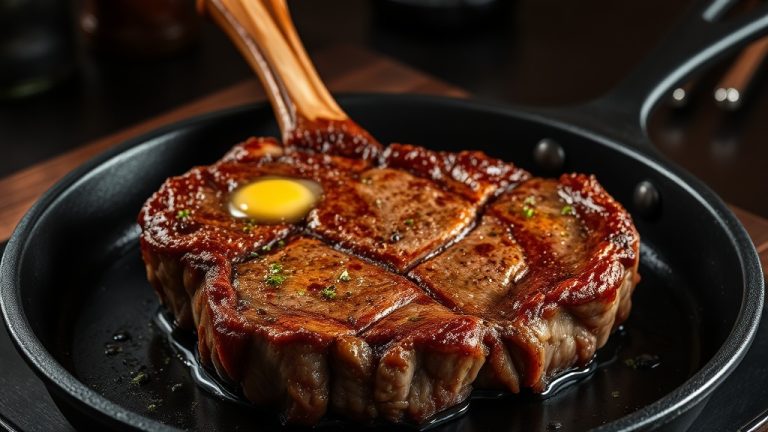
1) Classic Pan-Seared (Recommended)
Best for: 1.25–1.5 inch steaks, indoor cooking
- Remove from fridge 30 minutes before cooking.
- Pat dry, season with kosher salt and pepper.
- Preheat cast-iron skillet over high heat until very hot.
- Sear 2–3 minutes per side for crust.
- Add butter, garlic, thyme, and baste 1 minute.
- Check temp in thickest part (strip side).
- Rest 8–10 minutes before slicing.
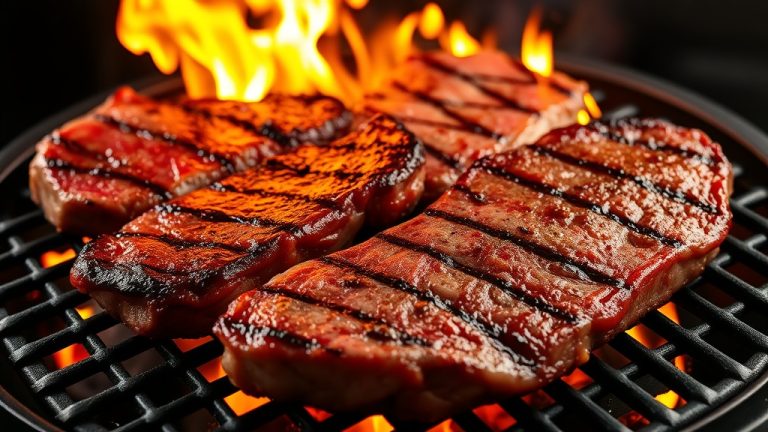
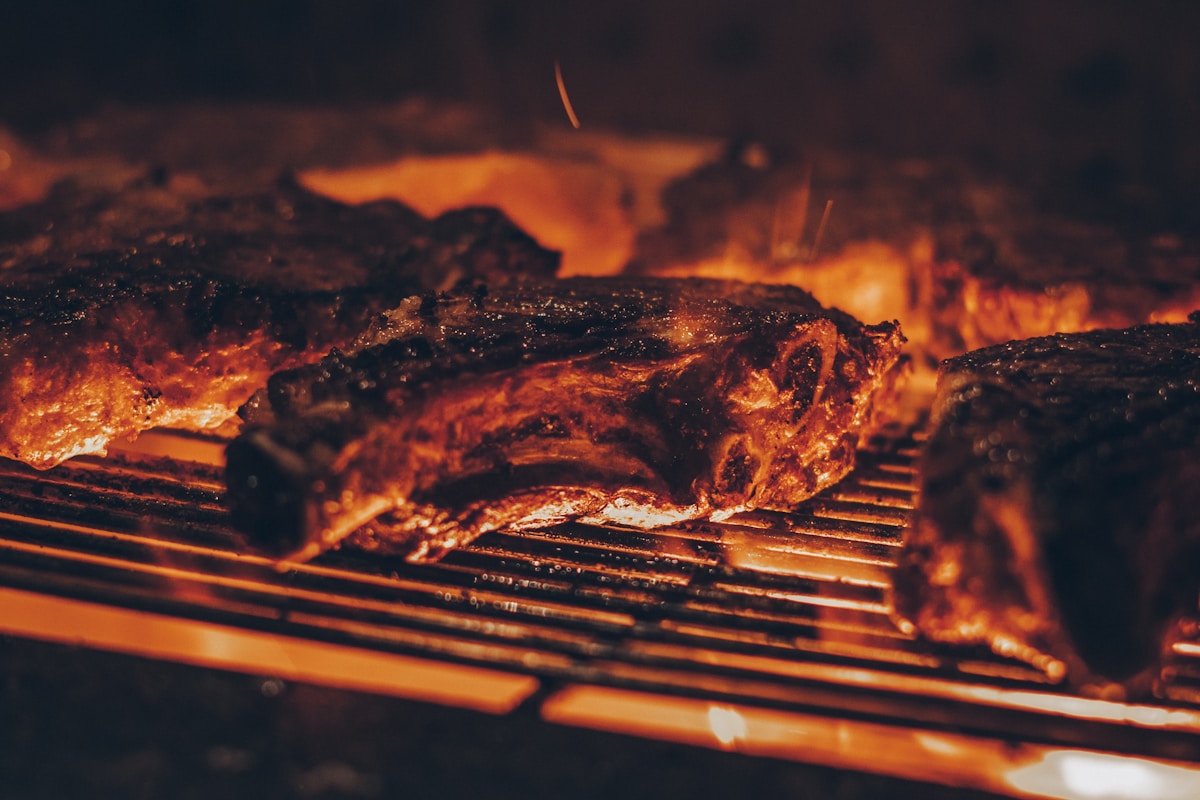
2) Two-Zone Grill (Best for Large T-Bones)
Best for: 1.5+ inch steaks, outdoor grilling
- Set up two heat zones: direct high heat and indirect medium heat.
- Sear 2 minutes per side over direct heat.
- Move to indirect heat, close lid, cook to target temp (~10–15°F below goal).
- Rest 10 minutes, then slice against the grain.
3) Reverse Sear (Best for Thick T-Bones)
Best for: 2+ inch premium T-bones
- Season and let come to room temp.
- Cook in 250°F oven on a rack over a sheet pan until internal temp reaches ~115°F (about 20–30 minutes depending on thickness).
- Sear hard in a very hot skillet or over direct grill heat, 60–90 seconds per side.
- Rest 10 minutes, slice, and serve.
This method gives perfect edge-to-edge doneness and a restaurant-quality crust.
How to Slice and Serve T-Bone
After resting:
- Locate the bone—slice on either side of it.
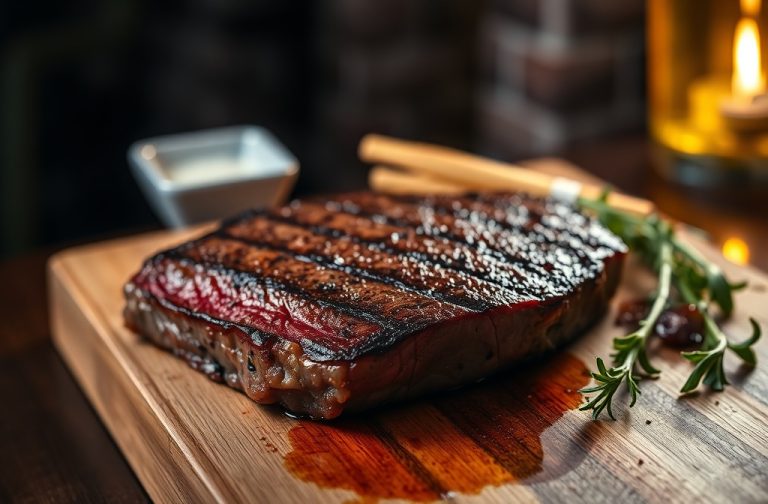
- Slice the strip side against the grain into 0.5-inch pieces.
- Slice the tenderloin side against the grain similarly.
- Arrange on a warm platter, alternating or separating the two muscles.
Some diners prefer one side over the other, so arranging them together makes the choice easy for everyone.
What to Serve with T-Bone
- Creamy mashed potatoes or roasted fingerlings
- Grilled vegetables (asparagus, zucchini, peppers)
- Classic creamed spinach
- Peppercorn sauce or béarnaise
- Simple arugula salad with lemon vinaigrette
T-bone is rich enough to handle bold, creamy, or acidic accompaniments without being overwhelmed.
T-Bone Nutrition
T-bone is high in protein and rich in B vitamins, iron, and zinc. The strip side contributes fat and calories; the tenderloin is leaner. Exact values depend on grade and trim, but a typical 16-oz T-bone (cooked) provides:
- ~600–800 calories
- ~50–70g protein
- ~40–60g fat
- Significant iron, zinc, B12, B6
Common Mistakes to Avoid
Mistake 1: Overcooking the Tenderloin Side
Fix: Use a thermometer and pull early. The tenderloin cooks faster than the strip.
Mistake 2: Slicing with the Grain
Fix: Always slice perpendicular to the muscle fibers. Use the bone as your guide—cut both sides separately.
Mistake 3: Skipping Rest
Fix: Rest at least 8 minutes. Cutting early sends all the juices onto the cutting board.
Mistake 4: Using Too Low Heat
Fix: T-bone needs high heat for a proper crust. If your pan is not smoking, it is not hot enough.
Final Takeaway
T-bone is a masterpiece of beef architecture—two premium muscles separated by a iconic bone. Cook it right (medium-rare, rested, sliced against the grain) and it delivers one of the best steak experiences you can get. Do not complicate it. Season simply, sear hard, rest properly, and slice carefully.
Once you master T-bone, you have mastered the art of the bone-in steak.
T-Bone Buying Guide: Butcher Counter Checklist
At the counter, use a quick checklist before buying:
- Uniform red color (not gray patches)
- Good strip-side marbling
- Tenderloin side thick enough to survive searing
- No excessive purge in the package
- Even cut thickness from end to end
If two steaks cost the same, pick the one with better marbling on the strip side and cleaner bone profile. Those two details usually matter more than brand labels.
Dry Brine vs Last-Minute Salting for T-Bone
T-bone benefits greatly from dry brining because it has two muscles with different textures. Salting in advance improves flavor penetration and helps both sides cook more evenly.
- Overnight dry brine: best flavor and crust
- 40-minute dry brine: excellent practical option
- Immediate salt: acceptable when short on time
Use kosher salt generously but evenly. If using table salt, reduce quantity significantly because it is denser and saltier by volume.
Managing the Two-Muscle Challenge
The biggest technical challenge with T-bone is that strip and tenderloin cook at different speeds. Here are practical ways to manage it:
- Place tenderloin side farther from the hottest zone on grill.
- In skillet, angle strip side toward the hotter area of the pan.
- For very thick cuts, finish in oven after searing.
- Use thermometer and monitor strip side first.
With this approach, both sides finish in the same doneness window instead of one being overcooked.
Serving T-Bone for Guests
T-bone is ideal for family-style serving. Cook one or two large steaks, slice both muscles separately, then arrange on a platter with finishing salt and warm butter. Guests can choose strip pieces for stronger beef flavor or tenderloin pieces for delicate texture.
For dinner parties, this approach looks premium and reduces stress compared with cooking many individual steaks to different doneness levels.
Storage and Leftovers
Cooked T-bone keeps well for 2–3 days in the refrigerator if wrapped airtight. Remove meat from bone before storing to save space and reheat more evenly. Reheat gently in a low skillet with butter or in a low oven.
Great leftover uses:
- Steak and eggs
- Steak sandwiches with horseradish mayo
- Steak fried rice
- Beef salad with mustard vinaigrette