How to Grill the Perfect Steak: Charcoal and Gas Methods That Actually Work
How to Grill the Perfect Steak: Charcoal and Gas Methods That Actually Work
Great grilled steak is not luck. It is heat management, timing, and temperature control. Most home mistakes happen before the steak even touches the grates: weak preheat, wrong zone setup, wet steak surface, or no resting plan. Fix those fundamentals and your results become repeatable.
This guide gives you a complete system for grilling steak on charcoal or gas, including doneness targets, two-zone setup, reverse sear workflow, and practical solutions for common failures like flare-ups or uneven cooking.
Choose the Right Steak for Grilling
Not all cuts behave the same over open flame. For reliable results, use steaks at least 1.25 inches thick.
Best grilling cuts
- Ribeye (rich, forgiving)
- New York strip (beef-forward, firm)
- T-bone/Porterhouse (two textures in one)
- Top sirloin (value cut when cooked carefully)
- Flank/skirt (great for hot-fast grilling, slice thin against grain)
Thickness targets
- 1.25–1.5 in: easiest for direct sear + short finish
- 1.75–2 in: ideal for reverse sear
- <1 in: risky (overcooks before crust develops)
Prep Before Heat: Set Up for Success
1) Dry the steak thoroughly
Surface moisture kills sear. Pat dry with paper towels.
2) Season with intent
Use kosher salt and black pepper. Dry brine 40 minutes to overnight for deeper flavor and better crust.
3) Light oiling
Apply a thin coat of high-smoke-point oil to the steak, not a heavy pour onto grates.
4) Bring close to room temp (optional)
20–30 minutes out of the fridge helps even cooking for thick steaks.
How to Set Up a Two-Zone Grill
Charcoal Grill
- Bank coals to one side for direct high heat.
- Leave opposite side with little/no coals for indirect finishing.
- Clean and oil grates once hot.
Gas Grill
- Preheat all burners first.
- Then leave one burner high and another medium/low (or off) for cool zone.
- Lid closed during preheat and indirect finishing.
Two-zone setup prevents burning the outside while the inside stays undercooked.
Steak Doneness Temperatures (Use a Thermometer)
| Doneness | Pull Temp | Final After Rest |
|---|---|---|
| Rare | 120–125°F (49–52°C) | 125–130°F (52–54°C) |
| Medium-Rare | 125–130°F (52–54°C) | 130–135°F (54–57°C) |
| Medium | 135–140°F (57–60°C) | 140–145°F (60–63°C) |
| Medium-Well | 145–150°F (63–66°C) | 150–155°F (66–68°C) |
Medium-rare to medium is the sweet spot for most premium steaks.
Classic Grill Method (Direct + Finish)
- Preheat aggressively: grates should be hot enough to sear immediately.
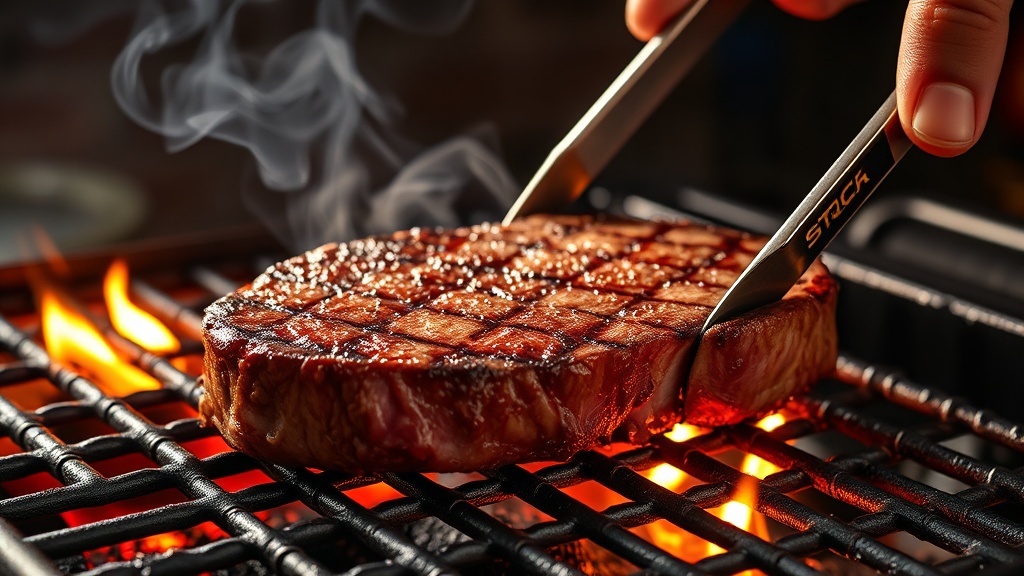
- Sear on direct zone: 1.5–3 minutes first side.
- Flip and sear: 1.5–3 minutes second side.
- Render edges: hold fat side briefly with tongs.
- Move to indirect zone: finish to target internal temperature.
- Rest: 5–10 minutes before slicing.
This method is ideal for 1.25–1.5 inch steaks.
Reverse Sear Method (Best for Thick Steaks)
For steaks above 1.75 inches, reverse sear gives more even doneness and less gray overcooked band.
- Cook on indirect heat first until steak is about 10–15°F below target.
- Move to hot direct zone and sear hard 45–90 seconds per side.
- Rest and serve.
How to Prevent Flare-Ups
Fat dripping on flame is normal, but uncontrolled flare-ups create bitterness and burnt crust.
- Keep a cooler zone ready and move steak temporarily when flare-ups spike.
- Trim extreme exterior fat (not all fat).
- Avoid sugary marinades at high heat.
- Clean old grease from grill before session.
Charcoal vs Gas for Steak
Charcoal strengths
- Deeper smoke and fire flavor
- Higher max heat potential
- Excellent for crust and live-fire style
Gas strengths
- Faster setup and cleanup
- Precise burner control
- Ideal for repeatable weeknight grilling
Both can produce excellent steak. Technique matters more than fuel type.
When to Use Marinades vs Dry Seasoning
For premium cuts like ribeye, strip, and porterhouse, simple seasoning usually wins. Marinades are more useful for leaner or thinner cuts (flank, skirt, sirloin tip) where tenderizing and flavor layering help.
If marinating for high heat grilling:
- Pat dry before grilling
- Avoid excess sugar
- Reserve fresh sauce for post-grill finishing
Resting and Slicing: Final 10% of Quality
Resting is mandatory. Pulling steak and slicing immediately dumps juice onto the board.
- Thin steaks: 3–5 minutes
- Standard steaks: 5–8 minutes
- Large bone-ins: 8–12 minutes
Always slice against the grain for tenderness, especially flank and skirt.
Common Grilling Mistakes and Fixes
Mistake: weak preheat
Fix: preheat longer with lid closed.
Mistake: no thermometer
Fix: use instant-read probe in thickest section.
Mistake: wet steak surface
Fix: pat dry before seasoning and searing.
Mistake: one heat zone only
Fix: build two-zone setup every time.
Mistake: skipping rest
Fix: rest on warm plate before slicing.
Simple Grilled Steak Workflow (Cheat Sheet)
- Buy 1.25+ inch steak
- Dry and season
- Set two-zone grill
- Sear hard over direct heat
- Finish on indirect to target temp
- Rest and slice against grain
Follow this system and your grilled steak quality becomes predictable, whether you cook for yourself on a Tuesday or for guests on the weekend.
Final Takeaway
Perfect grilled steak is not about fancy tricks. It is about controlling heat, respecting temperature, and finishing with discipline. Master two-zone grilling and you can cook almost any steak cut with confidence.
Wind, Weather, and Grill Performance
Outdoor conditions change everything. Wind increases oxygen flow and can spike charcoal heat unexpectedly, while cold weather can force gas grills to work harder for the same grate temperature. If your results vary from day to day, this is often the hidden reason.
Use lid thermometers as directional indicators, but trust probe thermometers at the steak level for real control. In windy conditions, shield the grill and rotate steaks more deliberately between zones.
Batch Cooking Multiple Steaks
When grilling for a group, avoid dropping all steaks onto the hottest zone at once. That causes flare-up chaos and uneven doneness. Instead, stagger your sears and keep a structured sequence: sear group A, move to indirect; sear group B; then finish by target temperatures in order.
Labeling steaks by doneness preference on separate warm trays helps avoid service mistakes. For large parties, reverse sear all steaks first, then finish each to preference with short direct-heat bursts.
Sauce and Finishing Strategy for Grilled Steak
Grilled steak benefits from finishing contrast. Char and smoke create intensity; acids and herbs rebalance the palate. A practical approach:
- Fatty cuts: chimichurri or salsa verde
- Leaner cuts: peppercorn cream or garlic butter
- Party service: two sauces on side, not on top
This keeps crust intact and lets guests customize.
Food Safety Basics Without Overcooking
Safe steak cooking does not require turning premium beef into shoe leather. Keep raw and cooked tools separate, avoid cross-contamination on boards, and use clean thermometers. For whole-muscle steaks, high-heat sear plus proper internal targets gives excellent safety and quality balance.
If you use marinades that touched raw meat, do not reuse them as serving sauces unless boiled thoroughly.
Build Your Personal Grill Log
Advanced grillers keep a simple log: steak cut, thickness, grill type, weather conditions, pull temp, and final result. After a few sessions, your own data beats generic online timing charts. This is how you move from “sometimes great” to “consistently great.”
A log also helps diagnose recurring issues like hot spots, flare-up zones, or specific cuts that need different workflows.
FAQ: Grilling Steak
How long should I preheat the grill?
15–20 minutes for gas, 20–30 minutes for charcoal. Grates should be visibly hot and ready to sear immediately.
Can I grill frozen steak?
Possible, but not recommended. It creates uneven cooking and weak crust. Thaw first for best results.
What if I don’t have two zones?
Control heat by moving steak to grill edges or briefly pulling off heat entirely. Two-zone is much easier though.
How do I know when to flip?
When first side has deep brown crust and releases cleanly from grates—usually 1.5–3 minutes depending on thickness and heat.