Ribeye Steak: The Ultimate Guide to the King of Steaks
If you could cook only one steak for the rest of your life, ribeye would be a smart choice. It is rich, forgiving, flavorful, and incredibly satisfying whether you cook it in a cast-iron skillet, on a grill, or over live fire. For beginners, ribeye is the easiest path to a great steak dinner. For experienced home cooks, it is still the benchmark cut that tells you how good your technique really is.
When buying ribeye, look for USDA Choice or Prime grade with visible marbling throughout. The white streaks of intramuscular fat are what make ribeye the most flavorful steak cut.
This guide covers everything that matters to real cooks: where ribeye comes from, how to choose the right steak, what marbling actually means, ideal doneness temperatures, and the exact cooking process for steakhouse-quality results at home.
What Is Ribeye Steak?
Ribeye is cut from the rib primal, typically around ribs 6 through 12. The main muscle is the longissimus dorsi, which does less work than many other muscles in the animal. Less work means naturally tender meat. What makes ribeye famous, though, is marbling: thin veins of intramuscular fat that melt during cooking and coat the meat with deep, buttery beef flavor.
You may also see ribeye sold as:
- Boneless ribeye (most common in grocery stores)
- Bone-in ribeye (often called a cowboy steak when the bone is long)
- Tomahawk steak (extra-long frenched rib bone, mainly a presentation cut)
- Rib steak (regional naming variation)
All of these are close relatives. The eating experience is similar, but thickness, bone, and fat cap shape can change cooking time.
Why Ribeye Is So Popular
People love ribeye for one core reason: it tastes great even with minimal seasoning. Salt, pepper, heat, and proper rest are often enough. Compared with leaner cuts like top sirloin, ribeye has a wider margin of error. If you cook it slightly past your target, it still tends to stay juicy because marbling protects texture and moisture.
Ribeye is ideal when you want:
- Big beef flavor
- A tender bite without elaborate prep
- Reliable results for weeknight cooking or guests
Ribeye vs Other Popular Steaks
Ribeye vs New York Strip
New York strip is firmer and leaner with a pronounced beefy chew. Ribeye is richer, softer, and fattier. If you value tenderness and flavor density, ribeye wins. If you prefer cleaner texture and less fat, strip may be your cut.
Ribeye vs Filet Mignon
Filet is extremely tender but milder in flavor. Ribeye has more character and depth. Many steak lovers choose ribeye when flavor matters most and filet when tenderness is the top priority.
Ribeye vs T-Bone/Porterhouse
T-bone and porterhouse combine strip and tenderloin separated by bone. They are great for variety. Ribeye is more consistent bite to bite and usually easier to cook evenly.
How to Choose a Great Ribeye
1) Look for Marbling, Not Just Color
Choose steaks with fine, evenly distributed white flecks of fat throughout the meat. Avoid cuts with one giant fat seam and very little internal marbling. Good marbling means better flavor and better moisture retention.
2) Pick the Right Thickness
For home cooking, a ribeye 1.25 to 1.75 inches thick (3.2 to 4.5 cm) is ideal. Thin steaks overcook before crust develops; very thick steaks require more controlled heat management.
3) Understand Beef Grades
- USDA Prime: highest marbling, usually best for special meals
- USDA Choice: excellent everyday quality
- USDA Select: leaner, less forgiving, often less flavorful
If you have the option, choose Prime or high-end Choice for ribeye.
4) Bone-In or Boneless?
Boneless is easier and faster to cook evenly. Bone-in can add visual impact and sometimes slight insulation near the bone, but flavor difference is smaller than people think. Buy based on thickness and marbling first.
Dry-Aged vs Wet-Aged Ribeye
Aging improves tenderness and flavor complexity:
- Wet-aged beef (vacuum-packed) is common, clean-tasting, and juicy.
- Dry-aged beef develops nutty, concentrated, almost funky depth after moisture loss and enzymatic breakdown.
If you are new to premium steak, start with wet-aged Choice/Prime. If you already love ribeye and want a stronger flavor profile, try dry-aged (21 to 45 days is a common range).
Ribeye Doneness Guide (Internal Temperature)
Use an instant-read thermometer. Time alone is not reliable because thickness, pan type, and starting steak temperature vary.
| Doneness | Pull Temperature | Final Temperature After Rest | Center Appearance |
|---|---|---|---|
| Rare | 120–125°F (49–52°C) | 125–130°F (52–54°C) | Cool red center |
| Medium-Rare | 125–130°F (52–54°C) | 130–135°F (54–57°C) | Warm red center |
| Medium | 135–140°F (57–60°C) | 140–145°F (60–63°C) | Warm pink center |
| Medium-Well | 145–150°F (63–66°C) | 150–155°F (66–68°C) | Slight pink center |
| Well Done | 155°F+ (68°C+) | 160°F+ (71°C+) | Little to no pink |
Never cut into your steak to check doneness — use an instant-read thermometer. Cutting releases juices and results in a drier steak.
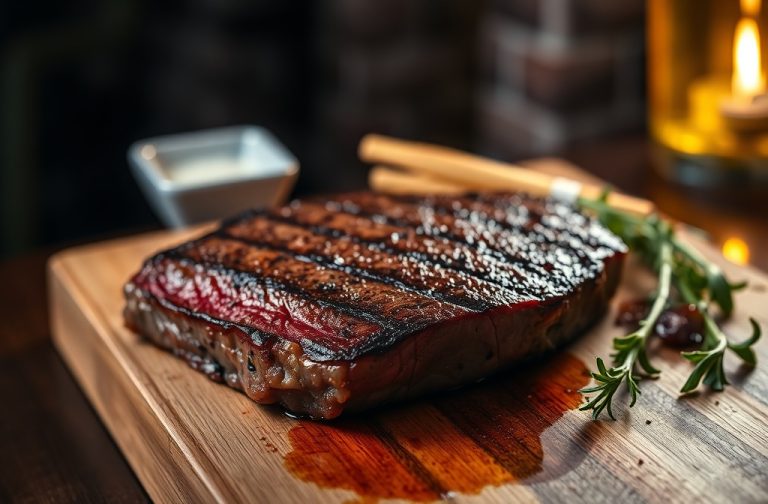
Best target for ribeye: medium-rare to medium. This range melts marbling effectively while preserving tenderness.
For the best ribeye experience, pull your steak at 130°F (54°C) for medium-rare. The high fat content means it stays juicy even at slightly higher temperatures than leaner cuts.
How to Cook Ribeye in a Cast-Iron Skillet (Step-by-Step)
What You Need
- 1 ribeye steak (1.25–1.75 in thick)
- Kosher salt
- Freshly ground black pepper
- High-smoke-point oil (avocado, grapeseed, or light refined oil)
- 2 tbsp butter (optional but recommended)
- 2 garlic cloves + 2 sprigs thyme or rosemary (optional)
- Cast-iron skillet
- Instant-read thermometer
1) Dry Brine for Better Crust
Salt the steak 40 minutes before cooking (or up to overnight uncovered in the fridge). This improves seasoning penetration and surface drying for a superior sear.
2) Bring Closer to Room Temp (Optional but Helpful)
Let the steak sit out for 20–30 minutes while the pan preheats. Do not leave it out for hours; short tempering is enough.
3) Preheat Aggressively
Heat the cast iron over medium-high to high until very hot. Add oil only when the pan is ready. You should see slight shimmering immediately.
4) Sear First Side
Place steak away from you to avoid oil splatter. Sear without moving for about 2–3 minutes until deep brown crust forms.
5) Flip and Build Flavor
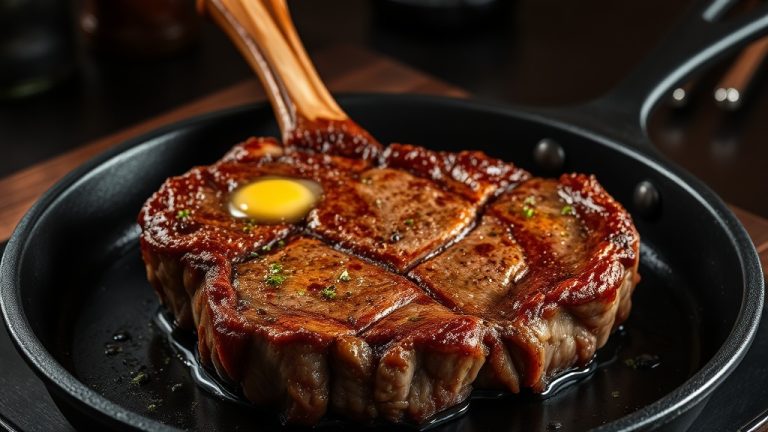
Flip and sear second side 2–3 minutes. Lower heat slightly, add butter, garlic, and herbs. Tilt pan and baste for 30–60 seconds.
6) Check Temperature, Not Ego
Insert thermometer into thickest part from the side. Pull at your target pull temperature (see table above).
7) Rest Properly
Rest 5–8 minutes on a warm plate. Do not cut immediately. Resting allows juices to redistribute and carryover heat to finish the steak.
How to Grill Ribeye (Charcoal or Gas)
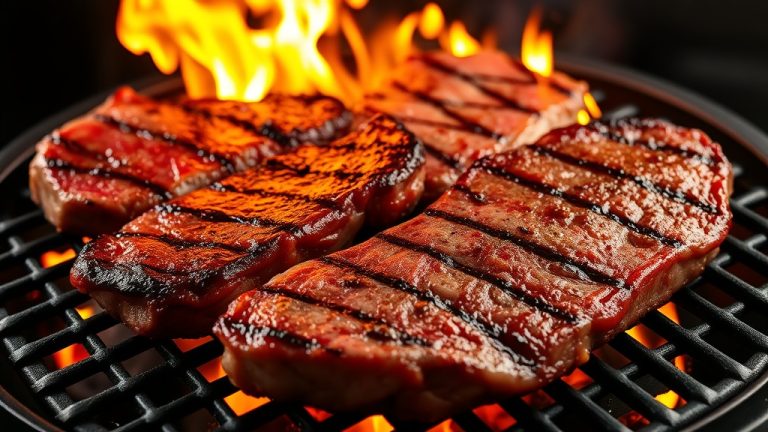
Use a two-zone setup: one high-heat zone for searing and one cooler zone for control. For thick steaks, reverse sear gives excellent consistency.
Classic Sear Method
- Preheat grill to high on one side, medium on the other.
- Sear each side 1.5–3 minutes over direct heat.
- Move to indirect side to finish to target temp.
- Rest 5–10 minutes.
Reverse Sear Method (Best for Thick Ribeye)
- Cook on indirect heat until internal temp is ~10–15°F below target.
- Sear hard over direct heat 45–90 seconds per side.
- Rest and serve.
Common Ribeye Mistakes (and Fixes)
Mistake 1: Underheating the Pan
Fix: Preheat longer. If your steak looks gray before browning, your pan is not hot enough.
Mistake 2: Cooking by Time Only
Fix: Use a thermometer. A 1-inch and 2-inch ribeye cannot share the same timeline.
Mistake 3: Skipping Rest
Fix: Rest at least 5 minutes. Cutting early spills juices and dries the center.
Mistake 4: Overseasoning with Sugary Rubs
Fix: Ribeye does not need sweet barbecue rubs for base flavor. Start with salt and pepper, then finish with sauce if desired.
Mistake 5: Trimming All Fat
Fix: Trim only excessive external fat if needed. Internal marbling is the point of ribeye.
Should You Marinate Ribeye?
Usually, no. Ribeye already has enough flavor and tenderness. Marinades can mask its natural character. If you want variation, use a quick finishing sauce instead: chimichurri, peppercorn sauce, garlic-herb butter, or a light red wine reduction.
If you do marinate, keep it short (30–90 minutes) and avoid high sugar content that burns during searing.
Best Side Dishes for Ribeye
- Roasted garlic mashed potatoes
- Crispy smashed potatoes
- Grilled asparagus
- Charred mushrooms with thyme
- Wedge salad with blue cheese
- Simple arugula salad with lemon and olive oil
For balance, pair rich ribeye with acidic or fresh components so the plate does not feel heavy.
Nutrition Snapshot
Exact values vary by grade and trim level, but ribeye is typically high in protein and rich in fat, especially saturated and monounsaturated fat. It is also a strong source of B vitamins, iron, zinc, and selenium. If you track intake, portion control matters more than avoiding ribeye altogether. A practical serving for most people is 8–12 oz cooked weight depending on goals.
How to Slice and Serve Ribeye
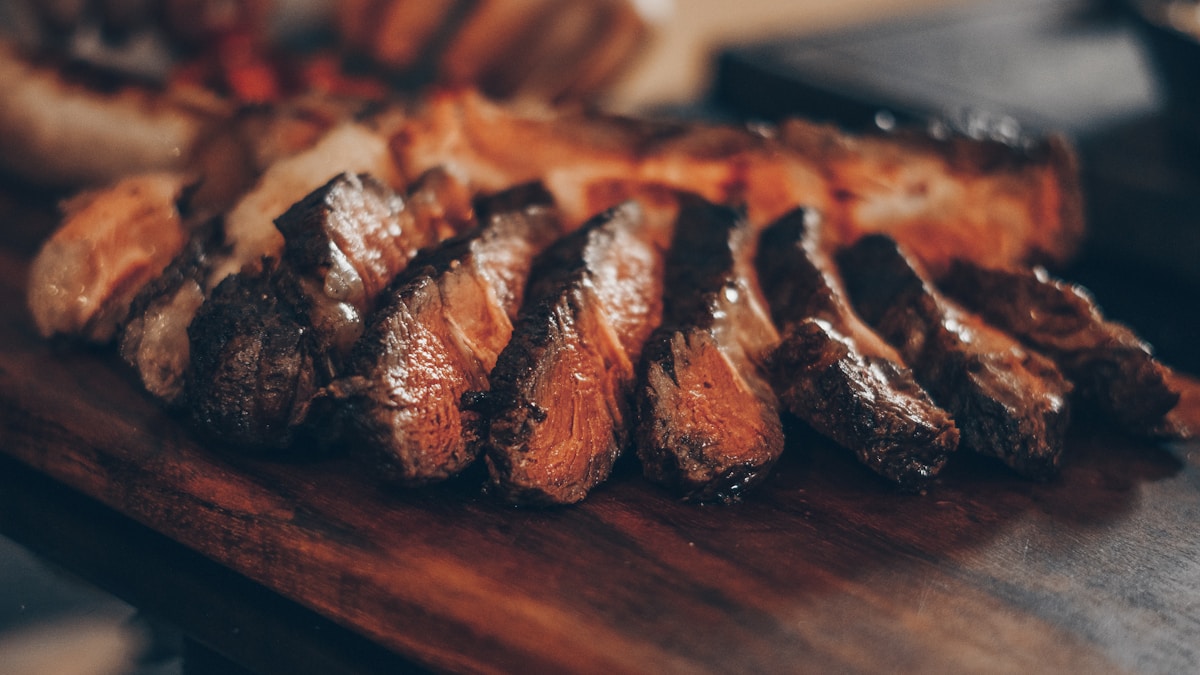
After resting, slice against the grain for maximum tenderness. If serving family-style, pre-slice and finish with flaky salt. If serving whole steaks, slice at the table and let guests season to taste.
Optional finishing touches:
- Flaky sea salt
- Fresh cracked pepper
- Compound butter coin
- Few drops of high-quality olive oil
Final Takeaway
Ribeye earned its reputation honestly. It combines tenderness, marbling, and flavor in a way few cuts can match. Start with a well-marbled steak, season simply, cook to temperature, and let it rest. That alone puts you far ahead of most home cooks.
Master this cut once, and every other steak gets easier.